
Related collections: white silk pillowcase · white 22-momme mulberry silk pillowcase ·...
$0.00 USD
Your pillowcase is in direct contact with your facial skin for roughly a third of your life. That makes it one of the most overlooked factors in any skincare routine, yet it quietly influences breakouts, fine lines, redness, and how well your nighttime skincare products actually work. If you have been wondering what pillowcase is best for skin, the answer starts with understanding how fabric interacts with your face while you sleep.
Your pillowcase is in direct contact with your facial skin for roughly a third of your life. That makes it one of the most overlooked factors in any skincare routine, yet it quietly influences breakouts, fine lines, redness, and how well your nighttime skincare products actually work. If you have been wondering what pillowcase is best for skin, the answer starts with understanding how fabric interacts with your face while you sleep.
Your face presses into a pillowcase for seven to eight hours every night. During that time, your skin is exposed to sebum, sweat, dead skin cells, remnants of skincare products, hair products, and environmental pollutants, all through direct contact with fabric. Pillowcase materials influence skin health through friction and moisture absorption, which means the wrong fabric can quietly undermine even an expensive sleep routine.
Pillowcases collect sweat, oils, and bacteria over time. When you sleep on a pillowcase that is rough, overly absorbent, or rarely washed, those substances accumulate, rub against the skin, and can clog pores without you noticing. Dirty pillowcases can trigger breakouts and skin irritation, especially along the cheeks, jawline, and forehead where contact pressure is highest. For people with oily skin or acne prone skin, this effect compounds quickly.
Friction matters more than most people realize. When your face drags across a coarse surface throughout the night, the repeated micro-shearing can create sleep lines and creases. Over time, these temporary marks can settle into more permanent wrinkles, particularly for side and stomach sleepers. Dermatologists distinguish between expression wrinkles (caused by muscle movement) and sleep wrinkles (caused by mechanical compression and friction), and your pillowcase plays a direct role in the latter. Research also shows that cotton pillowcases absorb moisture, reducing skincare effectiveness, essentially acting like a towel that pulls hydration and active ingredients away from the skin.
Ranking pillowcase fabrics for skin benefits means weighing four things: friction level, moisture retention, breathability, and ease of hygiene. The top contenders are mulberry silk pillowcases, bamboo pillowcases (particularly lyocell and viscose types), and cotton sateen. Each excels in different areas depending on your skin type and sleep environment. Do not fixate on marketing terms like "organic," "anti-acne," or "dermatologist-approved." Instead, look at the actual fiber content, weave structure, and care instructions on the label.
Mulberry silk is a natural protein-based fabric produced by Bombyx mori silkworms fed exclusively on mulberry leaves. It is a natural fiber with a continuous filament structure that produces an exceptionally smooth surface. Quality is measured in momme weight, with 19 to 22 momme considered the sweet spot for pillowcases. Higher momme means denser, more durable silk. Not all silk pillowcases are created equal, so look for genuine silk with a clear momme rating rather than vague descriptions.
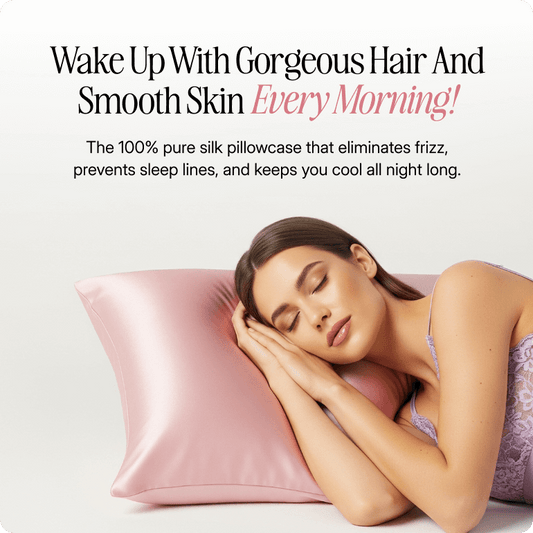
Silk pillowcases reduce friction, preventing sleep-induced wrinkles, which makes a mulberry silk pillowcase the go-to choice for anti-aging. The ultra-smooth surface allows facial skin to glide rather than catch and pull, helping minimize sleep creases and fine lines. Silk is naturally hypoallergenic, reducing skin irritation, which is why dermatologists frequently recommend it for people with sensitive skin, rosacea, or eczema. It also resists dust mites more effectively than cotton when kept clean.
For acne prone skin, silk offers a meaningful advantage: silk pillowcases do not absorb skincare products like cotton does, so your nighttime skincare products stay on your face rather than soaking into the fabric. Silk retains moisture, helping skin stay hydrated overnight, which supports the skin barrier instead of stripping it.
The trade-offs are real. Silk tends to be warmer than bamboo for hot sleepers, costs more upfront, and requires gentler washing: cool water, mild detergent, and air drying or low heat. It can also feel slippery, which some sleepers find annoying. But for anyone focused on anti-aging, irritation reduction, and skin hydration, the best silk pillowcase is the highest quality silk you can afford in the 19 to 22 momme range.
Best for: aging skin, dry skin, sensitive skin, rosacea, anyone wanting to maximize moisture retention and reduce friction.
When you see "bamboo pillowcases" on a label, it usually means bamboo-derived viscose or lyocell, not raw bamboo fiber. The distinction matters. Higher-end bamboo lyocell (similar to Tencel) uses a closed-loop solvent process that produces stronger, smoother fibers. Cheaper bamboo viscose may shrink, degrade faster, and absorb more moisture, behaving closer to standard cotton.
Bamboo pillowcases are breathable and antimicrobial, ideal for sensitive skin. Their natural breathability and moisture-wicking properties make them particularly effective for hot sleepers who wake up sweaty or flushed. Sweat that sits on the skin feeds acne-causing bacteria and yeast, so a fabric that pulls moisture away and allows it to evaporate can meaningfully reduce breakouts. The surface is smooth enough to reduce friction on both hair and skin, though not quite as slick as quality silk.
Quality variability is the main risk. Low-cost bamboo blends mixed with cotton or polyester blends lose the cooling and antimicrobial advantages. If acne control is your goal, verify that the pillowcase is made from 100% bamboo lyocell or high-quality viscose without heavy polyester content.
Best for: hot sleepers, acne prone skin, oily skin, humid climates, anyone wanting a vegan alternative to silk that is gentle on skin and hair.
Cotton sateen uses a satin-style weave pattern (typically three-over, one-under) that creates longer "floats" on the surface. This gives it a noticeably smoother, silkier feel compared with basic percale or rough cotton pillowcases. The result is less friction against facial skin, though still more than genuine silk or bamboo lyocell.
Cotton is highly absorbent and can strip skin of natural oils, causing dryness. Cotton pillowcases absorb moisture, reducing skincare effectiveness over time. This means your night creams, retinols, and serums are partially soaked into the fabric rather than sitting on your skin. However, cotton sateen is easy to wash at higher temperatures, widely available, and more budget-friendly than silk or premium bamboo. It is a durable pillowcase option that holds up well under repeated washing.
For acne prone skin, cotton sateen can work if you wash frequently, ideally every two to three nights. Its breathability is decent, though the sateen weave traps slightly more heat than percale. As an everyday compromise, it is a solid choice for people who want a smoother fabric than basic cotton without the maintenance or cost of silk.
Best for: budget-conscious shoppers, people who want smoother cotton without switching fiber types, those disciplined about frequent washing.
"Satin" describes a weave, not a fiber. Most inexpensive satin pillowcases are made from polyester satin or polyester blends, which creates an important distinction. Satin mimics the texture of silk and reduces friction for skin health, and a satin pillowcase does offer a smoother surface than rough cotton. Satin pillowcases help preserve skin moisture better than cotton because the weave limits direct fiber-to-skin abrasion.
However, unlike silk, polyester satin is a synthetic fabric made from nylon or rayon (or polyester) that does not breathe well. Synthetic materials can create a micro-climate that irritates skin conditions by trapping heat and sweat against the face. For oily skin or acne prone skin, this can drive sebum production and bacterial growth. Synthetic satin also tends to generate static, which affects both skin and hair. Silk is naturally hypoallergenic, unlike satin, and silk pillowcases retain moisture better than satin pillowcases overall.
Microfiber and cheap synthetic fabrics share similar limitations: they dry quickly and resist wear, but they trap heat and can cause overheating, potentially causing skin irritation and clogged pores. If your budget is tight, a polyester satin pillowcase is a step up from rough cotton in friction reduction, but it is not the best pillowcase for anyone dealing with persistent breakouts or night sweats.
Silver-infused, copper-embedded, and charcoal-treated pillowcases claim antimicrobial and anti-aging benefits. Lab data shows that copper-infused fabrics can achieve a 99.9% microbial reduction even after washing, while silver treatments often lose efficacy after several wash cycles. However, microbiological lab results do not always translate into visible skin improvements on your face.
Antibacterial natural fabrics like silk or linen are recommended for clear skin because they combine antimicrobial properties with breathability and smoothness. A specialty treatment layered onto a poorly breathing synthetic base may reduce bacteria slightly while still trapping sweat and heat. If you choose a specialty pillowcase, treat it as a bonus on top of good fabric fundamentals, not a replacement for smoothness, breathability, and consistent washing.
Acne prone skin is especially reactive to sweat, oil, bacteria, and friction. Because a pillowcase sits in direct contact with inflamed or congestion-prone skin for hours, fabric choice and washing habits directly affect whether you wake up with calmer skin or new breakouts.
Prioritize these features when shopping:
Moisture management is critical. A wet, warm pillowcase is a breeding ground for acne-causing bacteria and yeast. If you have oily skin or tend to sweat, cooling and moisture-wicking fabrics make a measurable difference. Avoid heavily fragranced laundry products, fabric softeners, and dryer sheets that leave residue and can clog pores or cause contact dermatitis.
A realistic best-case combination: a smooth silk or bamboo pillowcase paired with a twice-weekly wash routine can noticeably reduce new breakouts within a few weeks. One study found that washing pillowcases every two days led to a 92% reduction in acne lesion recurrence compared with baseline over 12 weeks.
Thick, heavy cotton, flannel, low-thread-count blends, and cheap polyester satin are more likely to trap heat and sweat, causing skin irritation and congestion. Very absorbent fabrics like old cotton pillowcases soak up acne treatments and moisturizers, reducing their effectiveness and sometimes leaving skin drier and more reactive.
"Bamboo" on a label is not automatically ideal. Low-cost bamboo or bamboo-cotton blends can behave like standard cotton in terms of absorption and heat retention. Always check the actual fiber composition. Linen helps regulate temperature and prevents breakouts, but its texture can be rough for some reactive skin types, so consider a softened or washed linen if you go that route.
For people with highly reactive or eczema-prone skin, patch-test new pillowcase fabrics for a few nights to check for itching or redness before committing.
Dirty pillowcases can harbor bacteria, leading to breakouts. Consistent hygiene is non-negotiable:
Use warm water with fragrance-free, dye-free detergent. Skip fabric softener and dryer sheets entirely. Keep a small stack of clean pillowcases ready in your linen closet so rotating them becomes effortless, especially after workouts, hot nights, or heavy makeup days.
If washing is not possible midweek, flipping the pillow to the unused side is better than nothing but still not a substitute for laundering when managing acne.
Pillowcases influence more than breakouts. Over time, friction, compression, and moisture loss contribute to visible signs of aging. Your sleep environment plays a role in whether you wake up with fewer sleep creases or deeper lines forming in the same spots night after night.
Pillowcases can contribute to fine lines due to mechanical compression. Every time you toss and turn against a rough or high-friction surface, the skin is tugged, stretched, and folded. Temporary creases that appear in the morning can, over years, transition into permanent lines, particularly on the cheeks, around the eyes, and on the chest.
Silk and satin pillowcases, along with smooth bamboo lyocell and cotton sateen, allow skin to glide over the surface instead of catching and pulling. Silk pillowcases reduce friction, minimizing sleep-induced wrinkles, making them the top recommendation for fewer sleep creases. Side and stomach sleepers benefit the most from low-friction fabrics. Pairing a smooth pillowcase with a supportive pillow height that does not mash the face into the surface amplifies the effect.
Absorbent fabrics like regular cotton act like a towel, pulling water and natural oils away from the skin and soaking up serums and creams applied before bed. Cotton pillowcases can absorb skincare products, reducing their effectiveness before active ingredients have time to penetrate.
Silk retains moisture, helping skin stay hydrated overnight. A silk or satin pillowcase, or a high-quality bamboo lyocell option, absorbs significantly less, helping maintain skin hydration and allowing active ingredients to work longer. For dry or barrier-damaged skin, a less absorbent pillowcase means less morning tightness, better glow, and fewer flaky patches. Think of your pillowcase as the final step in your sleep routine: it either supports or undermines everything you applied before bed.
Pure silk in the 19 to 22 momme range is a top choice for aging skin due to its glide, reduced compression, and moisture retention. The ultra-smooth surface of silk reduces friction and fine lines more effectively than any other common pillowcase material.
Bamboo lyocell or high-thread-count cotton sateen work well for those who prefer vegan or more budget-friendly fabrics but still want gentle, low-friction contact. Eczema, rosacea, and barrier-impaired skin benefit from the softest possible surface combined with fragrance-free laundering. Replace pillowcases that have become rough, pilled, or discolored from repeated washing, as those signs indicate increased potential for mechanical irritation. Most quality pillowcases should be replaced every one to two years.
The best pillowcase depends on your skin type and sleep habits. Here is how to match them.
Choose breathable, cooling options like bamboo lyocell or a silk or satin pillowcase for less product absorption. Avoid heat-trapping synthetic fabrics. Frequent washing, every two to three nights, is essential during summer or after intense workouts. Keep hair oils and heavy leave-in products off the pillow by tying hair back or using a hair wrap to prevent transfer that can irritate acne prone skin and clog pores.
Silk and smooth bamboo pillowcases help maintain moisture and avoid roughness. Use hypoallergenic detergents to wash pillowcases for sensitive skin, and choose a gentle cycle without fragranced additives. Cheap, stiff cotton, pilled microfiber, or heavyweight blends may scratch or over-absorb moisture from already compromised skin. Even with the right fabric, consistent hydration through a humidifier in dry climates and barrier-supporting skincare is key for healthier skin results.
Cooling, moisture-wicking materials like bamboo lyocell or eucalyptus-based pillowcases are ideal for hot sleepers who wake flushed or sweaty. These fabrics minimize moisture sitting on the face, reducing the risk of clogged pores, yeast overgrowth, and irritation. Some people prefer silk even in warm climates; in that case, choose lighter momme weights and pair with a breathable pillow insert. Change pillowcases more frequently during heat waves, every one to two nights, to stay ahead of sweat and oil buildup and maintain a clean sleep environment.
The right pillowcase can improve both hair and skin simultaneously by minimizing friction, breakage, and dryness. Since your hair rests against the same surface as your face, the choice affects everything from frizz to jawline breakouts.
When hair and skin rub against coarse fabrics, the result is lifted hair cuticles, tangles, split ends, and tiny abrasions on the skin surface. Silk pillowcases help prevent hair breakage and frizz because the smooth surface allows strands to glide rather than snag. Silk and satin pillowcases, along with bamboo and smooth cotton sateen, allow both hair and skin to glide, keeping curls defined, reducing frizz, and lowering the risk of red, irritated patches on the face. This makes them a dual-purpose investment in both hair health and skin health. Readers with fragile or chemically treated hair, whether from bleach, relaxer, or color, should prioritize low-friction fabrics even if their main concern is skin, because the benefits overlap for smoother hair and healthier skin.
Straight or wavy hair can often rely on a silk or bamboo pillowcase alone for healthy hair protection. Curly and coily hair may do best with a silk bonnet or scarf plus a smooth pillowcase as backup to maintain definition. Protecting hair from friction and moisture loss also keeps oils and styling products off the pillow, indirectly supporting clearer skin. Switch to lighter, non-comedogenic hair products and keep hair off the face at night with a loose braid, pineapple, or silk scrunchie to further reduce transfer to the pillowcase. This combined approach protects both hair and skin without compromise.
Even the best silk or bamboo pillowcase can cause breakouts and irritation if it is not washed and handled properly. Fabric quality sets the floor; hygiene determines the ceiling.
Washing in a mesh bag helps protect delicate fabrics like silk and bamboo from snagging. Many silk pillowcases feature an envelope closure or hidden zipper closure that should be secured before washing to prevent tangling.
Use fragrance-free, dye-free, and enzyme-gentle detergents for sensitive or acne prone skin to avoid irritant contact dermatitis. Fabric softeners and dryer sheets leave a waxy film that traps heat, odors, and bacteria and may clog pores on facial skin. Skip them entirely on pillowcases.
Run an extra rinse cycle occasionally to ensure no detergent residue remains. If you suspect a laundry product is causing breakouts or itchiness, test by washing one pillowcase with plain detergent and no additives for three to four weeks and observe whether your skin responds. Avoiding harsh chemicals in your laundry routine is one of the simplest changes for calmer skin.
Most pillowcases used regularly and washed often should be replaced every one to two years, or sooner if they become rough, thinned, or permanently stained. Visual and tactile signs of wear, such as pilling, fading, and stretched seams, indicate the fabric may be irritating skin or less effective at thermoregulation. A durable pillowcase that holds up well is a better investment than cycling through cheap replacements.
Invest in two to four quality pillowcases instead of many cheaper ones. This makes rotation and care easier while still maximizing skin benefits and maintaining your beauty sleep setup.
Both work well. Silk excels at minimizing friction and moisture retention, keeping skincare on your face. Bamboo lyocell is usually cooler and better for hot sleepers prone to sweat-related breakouts. Choose silk if anti-aging and product preservation are priorities; choose bamboo if temperature control is a bigger issue. Wash frequency and gentle detergent matter more for acne outcomes than the small differences between these two high-quality fabrics.
One night will not erase existing acne. But switching to a clean, low-friction, breathable pillowcase can immediately reduce new irritation and pore clogging. Most people notice fewer new breakouts, less morning redness, and better skin comfort over several weeks of consistent changes. Pillowcases complement a good skincare routine; they do not replace it.
Own at least three to four pillowcases so you can change them every two to three nights without doing laundry daily. A mix is fine, for example two silk and two bamboo or cotton sateen, as long as all are smooth, breathable, and comfortable. Having extras in the linen closet encourages sticking to a hygienic routine, which is critical for acne control.
For cotton, thread count influences smoothness, but extremely high counts are not always better and can reduce natural breathability. Materials like silk, bamboo, and Tencel use other quality measures, such as momme weight and GSM, rather than thread count. Prioritize a soft hand feel and certified, skin-safe fabrics over a specific number when your goal is minimizing irritation.
Yes. Fabric softeners and dryer sheets leave coatings that can trap heat, odors, and bacteria and sometimes clog pores. Use wool dryer balls or simply line dry pillowcases to keep fabrics soft without chemical residues. If you have unexplained cheek or jawline breakouts, try a three to four week trial of washing pillowcases with no softener and observe whether your skin clears.
Dermatological research has identified two distinct categories of skin aging: intrinsic aging driven by genetics and cellular processes, and extrinsic aging caused by environmental factors. While sun exposure receives the most attention as an extrinsic factor, mechanical compression during sleep is an increasingly recognized contributor to facial wrinkle formation.
Sleep wrinkles differ from expression lines in their formation mechanism. Expression lines form along muscle contraction patterns. Sleep wrinkles form where facial skin is compressed against a surface for extended periods. They typically appear on the forehead, around the eyes, and along the cheeks - areas of direct pillow contact. Over decades, these compression lines become permanent creases that are distinct from and additive to normal expression-based aging.
Surface friction determines how much skin is displaced during sleep. Higher friction means skin bunches and folds rather than sliding. POSHEY 22-momme silk has been lab-tested to produce 43% less friction than 300-thread-count cotton. This reduction means facial skin maintains a more natural position during sleep movements, reducing the depth and duration of compression creases.
The silk protein structure is the key differentiator. Mulberry silk fibers are composed of fibroin arranged in smooth, continuous filaments. Cotton fibers are plant-based cellulose with inherent surface irregularities. Even high thread count cotton cannot match the molecular-level smoothness of quality silk.
Nighttime skincare routines represent a significant investment in anti-aging. Retinoids, peptides, hyaluronic acid, and vitamin C serums are formulated to work over 6-8 hours of overnight contact. Cotton pillowcases absorb a substantial percentage of these products, reducing the dose that actually reaches the skin.
Silk is a protein fiber that absorbs far less moisture than cotton. Products applied before bed remain on the skin surface at higher concentrations, improving efficacy. Over months of consistent use, this improved product retention compounds into measurable skin quality improvements.
Silk naturally regulates temperature better than cotton or synthetic fabrics. Overheated skin produces more sebum, leading to clogged pores and inflammation. Silk breathes and wicks moisture without trapping heat against the face. For combination and oily skin types, this temperature regulation helps maintain balanced oil production overnight.
Yes. As skin loses elasticity with age, it becomes more prone to sleep creases that can become permanent wrinkles. POSHEY silk pillowcases reduce friction by 43%, minimizing the pressure and creasing that contributes to wrinkle formation.
Silk absorbs significantly less moisture than cotton. Cotton pillowcases can absorb your night creams, serums, and natural skin oils. POSHEY silk lets your skincare products stay on your skin where they work, not soaked into your pillowcase.
Yes. POSHEY silk pillowcases are Oeko-Tex Standard 100 certified - tested for over 100 harmful substances. Silk is naturally hypoallergenic and less likely to irritate sensitive or reactive skin compared to cotton or synthetic fabrics.