

Why Silk Pillowcases: The Complete Guide to Better Beauty Sleep

Featured Product

Table of Contents
- Why Silk Pillowcases: The Complete Guide to Better Beauty Sleep
- Key Takeaways
- Introduction: Why Switch to a Silk Pillowcase?
- Silk vs Satin: What's Really Touching Your Skin?
- How Silk Pillowcases Support Healthier Hair
- Skin Benefits: From Fewer Sleep Creases to Calmer Complexions
- Cooling Comfort: Breathability, Moisture Wicking, and Temperature Regulation
- Natural Fiber, Hypoallergenic Properties, and Cleanliness
- Real Silk Care: Hand Washing, Machine Washing, and Longevity
- How to Choose a Quality Mulberry Silk Pillowcase
- Is a Silk Pillowcase Worth It for You? (Honest Verdict)
- FAQ
Why Silk Pillowcases: The Complete Guide to Better Beauty Sleep
Key Takeaways
Real mulberry silk pillowcases can visibly reduce hair frizz, sleep creases, and morning bedhead within 2–4 weeks of consistent nightly use, thanks to a smooth surface that creates up to 43% less friction than cotton.
Silk's low-friction, natural fiber surface supports healthier hair and calmer skin compared to cotton or polyester satin pillow cases, making it a meaningful upgrade for anyone investing in a nighttime skincare routine or hair treatments.
High-quality mulberry silk pillowcases offer moisture retention, moisture wicking, and hypoallergenic properties that benefit both hair and skin-synthetic satin does not deliver the same combination.
Silk pillowcases are an upgrade to existing routines, not miracle cures, but they noticeably enhance results, comfort, and sleep quality over time.
Modern silk pillowcases can be either hand washed or machine washable on a delicate cycle, making care far easier than most people expect.

Introduction: Why Switch to a Silk Pillowcase?
Think about your typical evening: you cleanse, apply a serum, maybe a retinoid, work a leave-in conditioner through your hair, and then settle in for eight hours of sleep. What most people overlook is that a regular pillowcase-usually cotton-quietly absorbs those products, creates friction against your skin and hair, and can leave you waking up with bedhead, creased cheeks, and frizzy hair. That's a lot of undone effort, every single night.
So why silk pillowcases? The answer comes down to three things: less friction, better moisture balance for hair and skin, and a cooler, more breathable sleep surface than traditional cotton pillowcases. Sleeping on a silk pillowcase means your face skin glides across the fabric instead of dragging, your hair retains its natural oils instead of donating them to your bedding, and your nighttime products stay where you put them.
It's worth noting that real silk and a satin pillowcase made from polyester may look similar, but only real silk is a natural protein fiber with a structure close to human hair and skin. This article covers anti-aging support, healthier hair, skin comfort, temperature regulation, care tips, and how to choose a genuine mulberry silk pillowcase that actually delivers results.
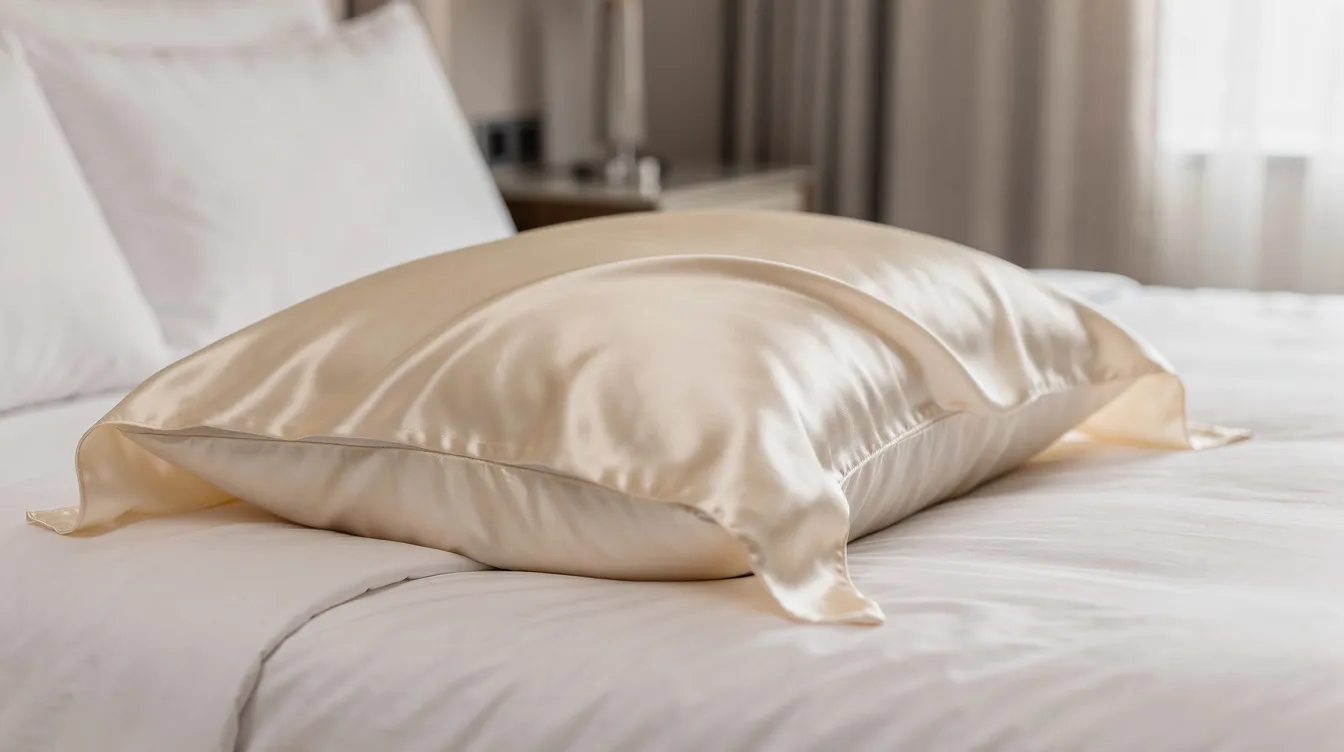
Silk vs Satin: What's Really Touching Your Skin?
Here's the distinction most shoppers miss: silk is a natural fiber, while satin is a weave pattern that can be made from any material-and in most cases, it's made from polyester. Both silk and satin pillowcases feel smooth initially, but the similarities end there.
Real silk is a protein-based fiber spun by silkworms. It's breathable, semi-hygroscopic (meaning it buffers moisture naturally), and its surface friction is genuinely low at the fiber level. Satin fabric made from synthetic fibers mimics the visual sheen but behaves differently overnight. Polyester satin has a moisture regain of roughly 0.4%, compared to silk's approximately 11% at typical indoor humidity. That means silk retains moisture and helps balance hydration against your skin, while satin absorbs it or simply repels it, leading to dryness.
Here's how silk and satin compare in practice:
Fiber origin: Silk is a natural protein fiber; satin is typically synthetic (polyester or nylon).
Moisture: Silk retains moisture; satin absorbs it unevenly, leading to dryness.
Allergens: Silk is naturally hypoallergenic; satin lacks this property.
Friction: Silk pillowcases reduce friction consistently; satin can cause irritation over time as the finish degrades.
Durability: Silk pillowcases last longer than satin alternatives-often several years versus 6–12 months.
Breathability: Silk allows airflow; polyester satin traps heat.
While satin pillowcases are budget-friendly and better than rough cotton, they do not deliver the full set of beauty benefits that real mulberry silk provides. Both silk and satin will feel smoother than cotton on night one-but only silk keeps performing month after month.
What Makes Mulberry Silk Special?
Mulberry silk is the highest quality silk available, produced by Bombyx mori silkworms fed exclusively on mulberry leaves. This controlled diet results in silk threads that are exceptionally uniform, strong, and ultra-smooth-qualities that make a real difference against your face for 2,500+ hours per year.
A mulberry silk pillowcase offers superior durability, natural sheen, and softness compared to generic silk blends or lower-grade fibers. The tightly woven structure of mulberry silk also helps with moisture wicking and minimizing allergen buildup, thanks to natural proteins within the fiber that other fabrics simply don't have.
To put it concretely: compare a 22–25 momme mulberry silk pillowcase with a thin polyester satin case. The silk feels denser, more substantial, and retains its smooth surface through dozens of washes. The satin may start showing pilling, static, and texture loss within a few months. That difference in longevity alone shifts the cost equation in silk's favor.
How Silk Pillowcases Support Healthier Hair
Your hair spends roughly one-third of every day pressed against a pillowcase. Over months and years, the friction and moisture loss during sleep significantly affect hair health-more than most people realize.
Here's how silk works for your hair: the ultra-smooth surface allows strands to glide instead of snag, which directly reduces split ends, morning knots, and hair breakage. Silk pillowcases reduce hair breakage by minimizing friction, and sleeping on silk reduces frizz and tangles across all hair types-straight, wavy, curly, or coily.
Unlike cotton, which draws moisture away from hair, silk absorbs less moisture and fewer natural oils. This helps hair maintain its natural moisture levels overnight, which is especially critical for color-treated, textured, or chemically processed hair. Silk pillowcases help maintain hair's natural moisture levels rather than stripping them.
The timeline for results is realistic: users notice smoother hair within 2–4 weeks of consistent nightly use, particularly when combined with protective styles like braids or silk scrunchies. If you've been fighting frizzy hair every morning, switching from cotton ones to silk is one of the fastest changes you can make.

Silk vs Cotton for Curly, Coily, and Chemically Treated Hair
Curly and coily hair has a more fragile cuticle structure and tends to be naturally drier, making it especially vulnerable to friction from cotton pillowcases. Cotton can wick away the precious moisture and oils that curls need to hold definition, leaving you with flat, tangled, or frizzy results by morning.
A mulberry silk pillowcase helps preserve that hydration overnight. Fragile or dry hair types benefit from using silk pillowcases due to less friction-the smoother the surface, the less mechanical stress on each strand.
Consider this scenario: someone with a twist-out or blowout switches from cotton to silk. Within two to three weeks, they notice less flattening on the side they sleep on, fewer fly-aways, and curl definition that lasts an extra day between wash cycles. The difference is real, and it compounds over time.
That said, silk pillowcases complement other protective measures like bonnets and silk scarves rather than replacing them entirely. For heavily textured hair or styles that need maximum hold, combining a silk pillowcase with a bonnet or scarf-along with your usual hair treatments-gives the best results.
Skin Benefits: From Fewer Sleep Creases to Calmer Complexions
Your face rests on the same patch of fabric for six to eight hours per night. That contact matters. The material can either support or undermine your skin health and appearance over time.
Silk pillowcases have 43% less friction than cotton pillowcases. That reduced friction directly impacts sleep creases-the lines that form when skin is pressed and dragged against rough fabric. Over months and years, repeated sleep creases can contribute to sleep lines and eventually permanent wrinkles. Sleeping on silk can minimize sleep creases that contribute to wrinkles, and silk pillowcases help prevent sleep wrinkles by reducing friction with the surface.
The skin benefits extend beyond wrinkles. Silk helps keep nighttime skincare products on the skin instead of soaking into fabric, so your serums, moisturizers, and retinoids work harder while you sleep. Silk pillowcases help retain skin's natural moisture, and silk pillowcases can improve skin texture over weeks of consistent use.
Silk's tightly woven fibers and natural hypoallergenic qualities can also be gentler on sensitive skin, including complexions prone to redness or irritation. Silk pillowcases are hypoallergenic and reduce skin irritation, and silk has been shown to reduce skin irritation in studies. However, silk supports healthier-looking, smoother skin and complements an anti-aging skincare routine-it does not erase deep wrinkles or cure chronic conditions on its own.
Hydration, Breakouts, and Sensitive Skin
Silk helps maintain the skin's natural moisture barrier by not over-absorbing water and oils. If you tend to wake up with dry skin that feels tight and dehydrated, silk's moisture retention keeps more of that hydration where it belongs-on your face.
Because silk doesn't hold onto as much moisture as cotton, it creates a less damp environment against your skin overnight. This matters for acne prone skin: a warm, humid surface is where bacteria thrive. Silk has natural antibacterial properties that help prevent acne, and a cleaner, drier surface can help reduce acne breakouts over weeks of regular use.
For those with eczema-prone or reactive skin, silk pillowcases can help ease eczema and other skin conditions. Research into silk clothing therapy for dermatological conditions has shown that silk's smooth, low-irritation surface reduces flare-ups for many users. Silk pillowcases provide a similar benefit on a nightly basis-though they're one piece of a broader approach, not a standalone treatment.
A practical tip: wash your silk pillowcase weekly and maintain a consistent skincare routine alongside it for best results.

Cooling Comfort: Breathability, Moisture Wicking, and Temperature Regulation
Beauty sleep also means comfortable sleep. If you're waking up sweaty, overheated, or peeling a damp pillowcase off your face, your sleep quality and your skin are both suffering.
Silk is a breathable natural fabric that allows air to circulate more freely than many synthetic materials, helping prevent that hot, sticky feeling against your cheek. Silk regulates temperature better than synthetic fabrics, and silk pillowcases help prevent overheating during sleep-two qualities that hot sleepers, menopausal women, and anyone in a humid climate will appreciate immediately.
Silk's moisture wicking properties allow it to wick moisture away from the skin's surface, where it can evaporate naturally, rather than trapping it like polyester satin often does. Silk pillowcases wick moisture better than cotton alternatives, keeping you drier and more comfortable through the night. Silk's breathability helps maintain comfortable body temperature without dramatic swings.
Picture a summer heatwave: you wake up with a damp cotton pillowcase stuck to your face versus a silk pillowcase that still feels cool and dry. That contrast alone can be the difference between a restless night and a good night's sleep.
Year-Round Temperature Regulation
Silk naturally buffers temperature changes. It feels cool when the room is warm but doesn't feel icy in winter, making it a genuine year-round pillowcase. Maintaining a stable sleep temperature supports more consistent sleep cycles and fewer middle-of-the-night wake-ups.
Unlike heavy polyester satin or jersey knit alternatives, mulberry silk pillowcases do not cling or trap extra heat against your skin and scalp. When compared to other materials like flannel or microfiber, silk consistently ranks as the most thermally neutral option for your sleep environment-helping regulate temperature without adding bulk or weight.

Natural Fiber, Hypoallergenic Properties, and Cleanliness
Silk is a natural protein-based fiber, structurally more similar to human hair than to any synthetic fabric. That compatibility is part of why it feels so different against skin compared to other fabrics.
Mulberry silk pillowcases often have hypoallergenic properties because their tightly woven natural fibers are less hospitable to common allergens. Silk is naturally hypoallergenic and dust mite resistant-the dense weave and smooth fiber surface make it harder for dust mites to colonize compared to looser-weave cotton. Silk minimizes allergen exposure during sleep, which can meaningfully help allergy sufferers or those with asthma when combined with other environmental controls.
Silk does not readily hold onto environmental particles and odors the way more porous fabrics do, making it a cleaner-feeling choice between washes. For anyone building a less irritating sleep environment, a silk pillowcase made from natural fibers is one practical step-though it's important to differentiate between "may help reduce exposure" and medical treatment.
Less Buildup, Easier Washing
Because silk fibers are smoother and less absorbent than cotton, they accumulate less residue from hair products, heavy creams, and natural skin oils. This makes it easier to rinse out grime during regular washing, keeping the pillowcase fresher and kinder to skin over time.
Wash your silk pillowcase about once a week to keep the surface clean and pore-friendly.
Consistent laundering matters more for preventing acne than the fabric itself.
A clean silk surface minimizes contact with buildup that can clog pores or weigh down hair.
The smooth, tightly woven structure means residues sit on the surface rather than embedding deep in the weave.
Real Silk Care: Hand Washing, Machine Washing, and Longevity
One of the biggest myths about silk is that it's impossibly delicate fabric that falls apart at the first sign of water. In reality, quality mulberry silk pillowcases are surprisingly durable with the right care.
Both hand washing and machine washable routines work. Many modern silk pillowcases are labeled safe for a cold, gentle delicate cycle inside a mesh laundry bag. The key care rules are straightforward:
Use a pH-neutral or silk-safe mild detergent.
Avoid bleach and fabric softeners entirely.
Air dry by hanging or lay flat on a towel away from direct sunlight.
If needed, iron on low heat with a cloth barrier between the iron and the silk fabric.
For weekly washing, fill a basin with cool water, add a small amount of silk-safe detergent, submerge the pillowcase and gently agitate for a few minutes, then rinse thoroughly. For makeup or skincare stains, spot-treat with the same detergent before a full wash.
With proper care, a real mulberry silk pillowcase (22+ momme) can last 3–5 years of nightly use. Over that lifespan, the cost per night often works out to pennies-far less than the beauty products the pillowcase helps preserve.
Hand Washing vs Machine Washing: Which to Choose?
Hand washing in cool water is the gentlest method and ideal for preserving sheen and smoothness, especially for higher momme weights like 22–25 momme. It gives you full control over agitation and temperature.
Machine washing on a cold delicate cycle inside a mesh bag is the practical choice for busy routines. Keep spin speed low and use a mild detergent-nothing with enzymes or brighteners.
A few common concerns:
Wrinkles after washing: Smooth the pillowcase while damp and air dry. Minor wrinkles relax naturally.
Drying time: Silk dries faster than you'd expect-usually within a few hours when hung or laid flat.
Ironing: Acceptable on the lowest heat setting with a cloth barrier, but rarely necessary.
Always follow the manufacturer's care label, since not all silk pillowcases are constructed the same. Zippers, piping, or blended edges may affect specific instructions.
How to Choose a Quality Mulberry Silk Pillowcase
Not all silk pillowcases are equal. The difference between a mediocre purchase and a genuinely beneficial one comes down to fiber type, weave, momme weight, and construction details.
Here are the key terms to understand:
Momme weight: Measures silk fabric density. One momme equals roughly 4.34 grams per square meter. For pillow cases, the ideal range is 19–25 momme-this gives you a balance of softness, durability, and breathability. High-quality silk pillowcases are measured by momme weight and grade.
Grade 6A: The top fiber quality, meaning long, uniform filaments from the best part of the cocoon. This is the highest quality silk you can buy.
100% mulberry silk: Confirms the fiber is genuine, not a blend or "silk-like" synthetic.
For construction, look for an envelope closure or a smooth, snag-free zipper. Standard, queen, and king sizing should be clearly listed. Colorfast dyes that don't bleed during washing are especially important if you wash frequently. Certifications like OEKO-TEX Standard 100 indicate testing for harmful substances and give additional confidence in your purchase.
Silk vs Satin Pillowcase: When Is Satin Enough?
A satin pillowcase made from polyester can be a smoother, lower-friction option than rough cotton for anyone on a tight budget or simply testing whether they like sleeping on a smooth surface. It's a reasonable starting point.
But the contrast with real silk is significant. A natural fiber like mulberry silk offers moisture retention, moisture wicking, temperature regulation, and hypoallergenic properties that synthetic materials cannot replicate. Satin degrades faster, traps more heat, and doesn't interact with moisture the way silk does.
If you're serious about long-term improvements to skin and hair-especially with fragile, textured, or high-maintenance hair-a mulberry silk pillowcase is where the real results live. Satin may be a first step, but upgrading to real silk is what unlocks the full beauty sleep package.
Is a Silk Pillowcase Worth It for You? (Honest Verdict)
The core value proposition is straightforward: reduced friction, better moisture balance, cooler sleep, and a cleaner-feeling surface for both hair and skin. Silk pillowcases provide numerous benefits that compound over time-not overnight miracles, but measurable, visible improvements.
Who benefits most:
People with curly, coily, or chemically treated hair
Anyone with sensitive skin, eczema-prone skin, or acne prone skin
Hot sleepers and those experiencing hormonal night sweats
Anyone already investing in advanced skincare or haircare routines
The beauty benefits are real, but so are the limitations: a silk pillowcase won't single-handedly cure acne, reverse deep wrinkles, or undo years of hair damage. What it does is support every other effort you make-sleeping on silk means your products work better, your hair faces less stress, and your skin encounters less friction.
On cost: a quality 22-momme mulberry silk pillowcase priced around $80–$100 lasts 3–5 years. That's roughly 7–9 cents per night-less than the cost of a single pump of most serums. Compared to replacing a regular pillowcase (or the cotton ones you cycle through) every year, silk is the more economical long-term choice.
Switching to a mulberry silk pillowcase is one of the simplest, lowest-effort upgrades you can make to your nightly routine. Try it for two to four weeks and let your morning mirror do the talking.

FAQ
How long does it take to see results from sleeping on a silk pillowcase?
Some people notice fewer sleep creases and less bedhead within the first few nights. More substantial improvements-like reduced frizz, less hair breakage, and visibly smoother skin-typically show within 2–4 weeks of consistent nightly use. Results depend on your starting condition, hair type, and whether you combine the silk pillowcase with other healthy habits like regular trims and a gentle skincare routine. Expect gradual, compounding improvement rather than an instant transformation.
Can a silk pillowcase help with acne or eczema?
A mulberry silk pillowcase creates a gentler, less irritating, and cleaner surface that may help reduce friction-related flare-ups for acne- or eczema-prone skin. Silk's hypoallergenic properties and smoother texture are supportive, but they are not a replacement for dermatologist-recommended treatments or medication. For best results, combine a silk pillowcase with regular weekly washing and a consistent skincare routine tailored to your condition.
How can I tell if a pillowcase is made from real silk?
Check the label for "100% mulberry silk," "Grade 6A," and a specified momme weight (ideally 19–25 momme). Be cautious of vague terms like "silky," "silk feel," or "silk-like"-these almost always indicate polyester. Real silk feels cool to the touch and has a subtle, natural sheen rather than the super-shiny, plastic-like gloss common with polyester satin. Certifications like OEKO-TEX Standard 100 add another layer of confidence, and reputable brands clearly publish fabric composition and care instructions.
Will my silk pillowcase shrink or lose its softness over time?
High-quality mulberry silk pillowcases retain their shape and softness for years when washed correctly-cool water, gentle detergent, no high-heat drying. Occasional slight wrinkling after washing is normal and can be minimized by smoothing the pillowcase while damp and air drying it flat or on a hanger. The key is avoiding harsh detergents, bleach, and tumble dryers, all of which degrade the delicate fabric and accelerate wear.
Do I still need a bonnet or scarf if I use a silk pillowcase?
A silk pillowcase is often enough for many people to see reduced frizz and breakage on its own. However, those with very fragile, curly, or protective styles may still prefer a silk or satin bonnet or scarf as an extra layer of protection. Combining a silk pillowcase with a bonnet can give maximum benefit for highly textured hair. Experiment and find what level of protection works best for your hair type and lifestyle-there's no single right answer.
You May Also Like


Join Our Newsletter
Sign up to be the first to know about our can't-miss product drops, special VIP offers & exclusive discounts.